Most people start thinking about a pool when the weather gets hot. That is completely natural. But in Ontario, the time to act on that thought is not summer. It is the fall before.
Ontario's pool building season is short. Between frozen ground, permit timelines, and shell delivery schedules, the window for getting a pool in the ground and ready for swimming is tighter than most homeowners realize. Understanding that timeline is the difference between swimming in June and swimming in September.
This article lays out the full seasonal calendar so you know exactly when to plan, when to sign, and when to expect your pool to be finished.
How does the Ontario pool building season work?
Ontario has a defined building season for outdoor construction. The ground freezes in late November or December and stays frozen until March or April. You cannot dig a pool in frozen ground.
That gives pool companies a working window of roughly late March or April through October. In a good year, that is about 7 months. In a year with a late spring or early fall, it can shrink to 6 months.
During those 6 to 7 months, every pool company in Ontario needs to complete all of their projects for the year. The schedule fills up fast, especially the early spring slots that let homeowners swim for most of the summer.
Here is the basic reality: there are more people who want pools installed in May and June than there are installation crews available. The homeowners who plan ahead get the early spots. The homeowners who call in April get what is left.
What does the seasonal calendar look like?
Here is a month-by-month breakdown of the pool buying and building cycle in Ontario:
| Month | What to Do | Why It Matters |
|---|---|---|
| September – October | Research and plan | Visit showrooms, look at pool models, get initial quotes |
| November – December | Compare quotes, arrange financing | Take time to compare without pressure. Get financing pre-approved |
| January – February | Sign contract, finalize design | Pool shell gets ordered. Permit applications start |
| March | Permits and preparation | Municipal permits are submitted and (ideally) approved |
| April – May | Installation begins | Excavation, shell placement, plumbing, backfill |
| May – June | Patio, fencing, finishing | Patio poured or laid, fencing installed, equipment connected |
| June – July | Swimming | Pool is filled, balanced, and ready for use |
This is the ideal timeline. It assumes everything goes according to plan. Weather delays, permit hold-ups, and supply chain issues can push things back by weeks. Building in buffer time is always wise.
Why is spring too late to start planning?
This is the single most important thing to understand about buying a pool in Ontario. If you call a pool company for the first time in April, you have already missed the early summer installation window.
Here is why:
- Shell lead times. Fiberglass pool shells are manufactured to order. Lead times from manufacturers like Thursday Pools are typically 6 to 10 weeks. If you sign a contract in April, the shell might not arrive until June
- Permit timelines. Municipal permits in London and most Ontario cities take 2 to 6 weeks to process. If you apply in April, you might not have a permit until May or June
- Scheduling. Pool companies book their spring and early summer installation slots months in advance. By April, those slots are filled. You go to the back of the line
- Site visits and design. Before any work begins, your pool company needs to visit your property, assess soil conditions, plan the layout, and finalize the design. That takes time
The result is that an April start usually means a July or August installation, and sometimes later. You lose most of the swimming season.
A homeowner who started planning in September and signed a contract in January is swimming in June. A homeowner who started planning in April might be swimming in August or September, if everything goes smoothly. Same pool, same company, different timing.
What are the lead times for pool shells?
Fiberglass pool shells are not sitting in a warehouse waiting for you. Each shell is manufactured after it is ordered. The manufacturing process takes time, and then the shell needs to be shipped from the factory to your location.
| Stage | Typical Timeline |
|---|---|
| Manufacturing | 4 – 6 weeks |
| Quality inspection and curing | 1 – 2 weeks |
| Shipping to Ontario | 1 – 2 weeks |
| Total shell lead time | 6 – 10 weeks |
In peak season (March through May), lead times tend to stretch toward the longer end because manufacturers are handling orders from pool companies across North America. Ordering in January or February, before the rush, can mean shorter lead times.
Some pool companies keep popular shell models in stock or pre-order them for the season. Ask your pool company whether the model you want is already on order or needs to be ordered after you sign.
How long do permits take in Ontario?
Every municipality in Ontario requires a permit before a pool can be installed. In London, you need a swimming pool enclosure permit at minimum. The permit process involves submitting a site plan showing where the pool, fencing, and equipment will go.
Permit processing times vary by municipality and by time of year:
| Municipality | Typical Processing Time |
|---|---|
| London | 2 – 4 weeks |
| Middlesex Centre (Komoka) | 2 – 3 weeks |
| Strathroy-Caradoc | 2 – 3 weeks |
| Thames Centre (Dorchester) | 2 – 3 weeks |
| St. Thomas | 2 – 4 weeks |
These times are for straightforward applications. If there are zoning issues, easements, or variances needed, the timeline can stretch to 6 to 8 weeks or longer.
Submitting permits in February or March, before the municipal building departments get their spring rush, tends to result in faster processing. Submitting in May or June, when every contractor in the city is filing permits, can mean delays.
What happens during the fall planning stage?
Fall is the ideal time to start the pool planning process. The weather is still nice enough for site visits, but there is no pressure to rush decisions.
Here is what the fall planning stage typically looks like:
- Research pool companies. Look at their work, read reviews, and narrow your list to 2 or 3 companies to contact
- Request consultations. Most pool companies offer free in-home or on-site consultations. They will look at your yard, discuss your options, and give you an initial sense of pricing
- Get quotes. Ask for detailed, itemized quotes so you can compare what is included
- Visit showrooms or completed projects. Seeing pools in person gives you a much better sense of size, colour, and finish than looking at photos online
- Think about financing. If you need a HELOC or loan, start the application process in the fall. Approval can take 2 to 6 weeks
Doing this work in September and October means you have November and December to make decisions without feeling rushed. There is no clock ticking. You can take your time, compare options, and make a confident choice.
Why sign a contract in winter?
Signing your pool contract in January or February puts your project at the front of the line for spring installation. Here is what happens after you sign:
- Your pool company orders the shell from the manufacturer
- A detailed site plan is drawn up for the permit application
- The permit is submitted to your municipality
- Your project is placed on the installation schedule
- Equipment and materials are ordered
All of this takes 6 to 10 weeks. If you sign in January, the shell arrives in March, the permit is approved by March or April, and installation can begin as soon as the ground thaws. You are swimming by June.
If you sign in April, the shell arrives in June, the permit comes through in May or June, and you join the installation queue behind everyone who signed earlier. You are swimming in August at the earliest.
What does a spring installation look like?
A spring installation is the target for most homeowners because it maximizes the first summer of swimming. Here is the typical sequence once the ground is workable:
Week 1: Excavation and base preparation
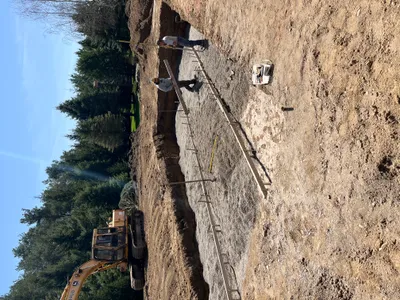
The excavation crew digs the hole to the exact dimensions specified by the pool manufacturer. The base is levelled and a bed of crushed stone is laid down and compacted. This is the foundation the pool sits on, so it needs to be precise.
Week 1-2: Shell placement and plumbing
The pool shell arrives on a flatbed truck and is lifted by crane into the excavation. Once it is positioned and levelled, the plumbing connections are made. The pool is partially filled with water and backfilled with gravel around the outside to hold it in place.
Week 2-3: Electrical and equipment
A licensed electrician runs the wiring for the pump, lights, and any automation. The equipment pad is poured or placed, and the pump, filter, heater, and sanitizer are installed and connected.
Week 3-4: Patio and fencing
The patio is poured (for concrete) or laid (for pavers). Fencing is installed around the pool area as required by municipal bylaws. Once the fence is inspected and approved, the pool can be filled.
Week 4+: Fill, balance, and swim
The pool is filled with water, the chemistry is balanced, and the equipment is tested. After a final inspection, you are ready to swim.
This timeline assumes no significant weather delays. A week of steady rain can push excavation back. A late frost can delay the start. Building in a buffer of 1 to 2 weeks is realistic.
Can you install a pool in summer?
Yes. Pool installations happen all summer long, from June through September. A summer installation works fine from a construction standpoint. The ground is workable, the weather is warm, and crews are productive.
The downside is that you lose part of your first swimming season. A pool installed in July means you swim from August through September. That is two months instead of four or five.
There is also more demand for installation crews in summer, which can mean slightly longer waits between stages of the project. Your excavation might happen one week and the patio pour three weeks later, instead of back to back.
If a summer installation is your only option because of timing, it still makes sense. You will have the pool for every full summer after that. Losing half of one summer is a trade-off, not a reason to wait another full year.
Are there price advantages to off-season planning?
Pool prices in Ontario are not like airline tickets. There is no dramatic "off-season discount" where you save 20% by buying in December instead of April. Pool projects are priced based on materials, labour, and scope, and those costs do not change with the calendar.
That said, there are real advantages to planning in the off-season:
- More time with your pool company. In winter, pool companies are less busy. You get more attention, more detailed planning, and more thoughtful design discussions
- Better scheduling. You get your pick of installation dates instead of taking whatever is left
- Current-year pricing. Pool prices tend to increase each year. Signing a contract in January often locks in the current price before any annual increases take effect
- No rush decisions. When you start in the fall, you have months to think, compare, and decide. When you start in the spring, every day you wait pushes your installation later
- Financing time. Applying for a HELOC or loan in the fall gives you time to get approved without the pressure of an installation date looming
The biggest financial advantage of planning early is not a lower price. It is avoiding the situation where you rush a decision and end up paying for upgrades or features you did not need because you felt pressured to finalize everything quickly.
What is a realistic timeline from start to swimming?
Here is a realistic timeline for two scenarios:
| Stage | Early Planner (Sept start) | Late Planner (April start) |
|---|---|---|
| Research and quotes | Sept – Nov | April – May |
| Sign contract | Dec – Jan | May – June |
| Shell ordered | January | June |
| Shell arrives | March | August |
| Permits approved | March – April | June – July |
| Installation begins | April | August – Sept |
| Installation complete | May – June | Sept – Oct |
| Swimming by | June | Next summer |
The early planner swims all summer. The late planner might get a few weeks of swimming in September, or more likely, the pool gets winterized shortly after completion and they swim the following summer.
Neither path is wrong. But understanding the timeline upfront helps you set realistic expectations and plan accordingly.
What about fall installations?
Fall installations (September and October) are worth considering if you missed the spring window. The weather is still warm enough for construction, and pool companies often have more availability because the spring rush is over.
The pool will be installed, filled, tested, and then winterized. You will not swim until the following May or June. But the pool will be ready and waiting when spring arrives, and you will have the entire next summer from opening day.
For homeowners who are not in a rush, a fall installation can be a practical choice. The project gets done, the yard settles over winter, and by spring everything looks established and natural.
Frequently Asked Questions
When is the best time to buy a pool in Ontario?
The best time to start planning and signing a pool contract in Ontario is fall or winter (September through February). This puts you first in line for spring installation, which means you will be swimming by early summer. Waiting until spring to begin the process usually means you will not be swimming until mid to late summer, or even the following year.
How long does it take to install a fiberglass pool in Ontario?
A fiberglass pool installation in Ontario typically takes 2 to 4 weeks of on-site work. However, the total timeline from signing a contract to swimming is usually 3 to 6 months when you include permitting, scheduling, shell ordering, and weather delays. Planning ahead is the key to shortening the wait.
Can you install a pool in winter in Ontario?
Pool installation in Ontario is generally not done in winter. The ground is frozen, and excavation is impractical. The building season runs from approximately April through October, depending on weather conditions. Some preparatory work like permits and planning can and should happen during winter months.
Is it cheaper to buy a pool in the off-season?
Pool companies are generally busiest from March through June. Reaching out in the fall or winter gives you more time with the company for planning and design, and you are more likely to get your preferred installation date. Some companies offer early-booking advantages, though prices are not dramatically lower. The bigger benefit is getting a better spot in the schedule.
What month should I start planning a pool for next summer?
September or October of the year before is ideal. This gives you time to research pool companies, get quotes, compare options, arrange financing, and sign a contract by December or January. Your pool company can then order the shell, submit permits, and schedule your installation for early spring.