When most people start shopping for a fiberglass pool, they focus on size and shape first. The colour question usually comes later. But once you see the difference gel coat colour makes to how the water looks, it often becomes one of the most important decisions in the whole project.
The water in a fiberglass pool is clear. It is the colour of the pool surface underneath that gives the water its visible colour. That surface is the gel coat, and it is baked into the shell during manufacturing. You pick a colour before the pool is made. After that, it stays that colour for the life of the pool.
This guide walks through the most common gel coat colours, what they actually look like with water in the pool, how they behave in different lighting, and what options are available from the manufacturers we install.
What is a gel coat and why does it matter?
The gel coat is the smooth, coloured outer layer of a fiberglass pool shell. It is what you see and touch when you are standing in the pool. Think of it like the glaze on a ceramic tile, but much thicker and more durable.
A good gel coat does several things:
- Provides the colour of the pool surface, which directly affects how the water looks
- Creates a smooth, non-porous surface that resists algae growth and staining
- Protects the structural fiberglass underneath from water exposure and UV damage
- Makes cleaning easier because dirt and debris do not cling to the smooth surface
Unlike concrete pools, which need to be resurfaced every 10 to 15 years, a quality gel coat can last 25 years or more with basic care. The colour does not fade significantly over time if the chemistry is kept in balance.
The thickness of the gel coat matters. Better manufacturers apply a thicker, more consistent gel coat. A thin or uneven gel coat can lead to blistering, fading, or colour inconsistency over time. This is one of the reasons pool shell quality varies between manufacturers.
How does gel coat colour change the way water looks?
Water is clear, but when light passes through it and hits the coloured pool surface, that colour reflects back through the water. The deeper the water, the more intense the colour appears. Shallow areas like tanning ledges look lighter. Deep ends look richer.
This is why looking at a dry pool shell in a factory or showroom does not give you an accurate sense of the final colour. The water changes everything. A gel coat that looks dark and intense when dry will look completely different with three to six feet of water on top of it.
Several factors affect how the colour appears:
- Water depth. Shallow areas appear lighter, deep areas appear darker and more saturated.
- Sunlight angle. Direct overhead sun makes colours look their most vivid. Low-angle morning or evening sun creates warmer tones.
- Cloud cover. Overcast skies mute the colour and make the water appear more grey-green regardless of gel coat colour.
- Surrounding landscape. Trees, fences, and buildings reflected in the water can shift the perceived colour.
- Water chemistry. Properly balanced water is crystal clear and shows the true gel coat colour. Cloudy or green water masks it.
What are the most popular pool colours?
Most fiberglass pool manufacturers offer between four and eight gel coat colour options. The exact names vary between companies, but the colours fall into a few main categories.
| Colour Family | Water Appearance | Popularity |
|---|---|---|
| Blue (medium to dark) | Classic bright blue, Caribbean feel | Most popular overall |
| Grey / Graphite | Modern, natural lagoon, blue-green tones | Growing quickly |
| White / Ice | Light turquoise, bright and clean | Steady niche |
| Sandstone / Tan | Green-blue, natural pond feel | Less common |
Blue remains the most popular choice by a wide margin. It gives people the look they have in their heads when they imagine a backyard pool. Grey has been gaining ground in recent years, particularly with homeowners who want a more contemporary look that blends with modern landscaping and grey-toned patios.
What does a blue fiberglass pool look like?
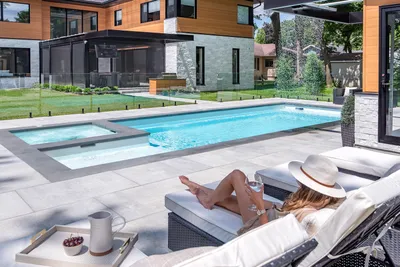
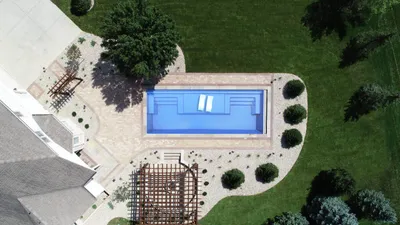
A blue gel coat creates the traditional swimming pool look. The water appears bright, clear blue in direct sunlight. In shade, it deepens to a rich royal blue. On overcast days, it takes on a slightly muted steel-blue tone.
There is usually some variation within the blue family. Some manufacturers offer a lighter "ocean blue" and a deeper "sapphire" or "Pacific blue." The lighter blues produce water that looks more tropical. The darker blues create a bolder, more saturated look.
Blue works well with almost any patio material and landscape style. It pairs naturally with both warm-toned (sandstone, buff concrete) and cool-toned (grey pavers, bluestone) surroundings. This versatility is part of why it remains the top choice.
One thing to keep in mind: a blue pool in the shade will look quite different from a blue pool in full sun. If your pool area is surrounded by tall trees or sits on the north side of your house, the blue will look deeper and less vivid than it would in an open, sunny yard.
What does a grey fiberglass pool look like?
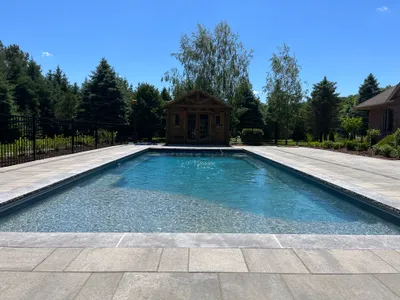
Grey gel coats produce water that looks blue-green or teal, not grey. This surprises many homeowners who expect grey water. The grey surface combined with clear water and sunlight creates a natural, lagoon-like appearance.
In direct sun, a grey pool often looks like a blue-green tropical lagoon. In shade or overcast conditions, it takes on a deeper, more mysterious appearance. The shallow end and tanning ledge areas look pale aqua, while the deep end appears deep teal or navy.
Grey has become popular because it gives a more natural, contemporary look. It pairs well with modern home designs, grey or charcoal pavers, natural stone, and darker landscaping. Homeowners who want their pool to feel like a natural body of water rather than a traditional pool often prefer grey.
The trade-off is that grey pools can look a bit muted on cloudy days. In Ontario, where we get our share of overcast skies, a grey pool will not pop with colour the way a blue pool does. On sunny days, though, the teal tones are striking.
What does a white fiberglass pool look like?
A white gel coat creates water that looks light turquoise or bright aqua. It gives the most "tropical resort" appearance, with the water appearing almost Caribbean in full sunlight.
White pools look very bright and open. The tanning ledge and shallow areas appear almost white with a faint blue-green tint. The deep end shifts to a clear light blue. The overall effect is clean, airy, and spacious.
White does show more debris than darker colours. Leaves, dirt, and any discolouration on the surface are more visible. Some homeowners see this as a drawback. Others see it as an advantage, because you can spot anything that needs cleaning right away.
White also shows the waterline more clearly. The ring that forms at the waterline from body oils, sunscreen, and mineral deposits is more visible on a white surface. Regular cleaning of the waterline keeps this in check, but it does require a bit more attention than darker colours.
What does a sandstone or tan pool look like?
Sandstone and tan gel coats create water that appears green-blue, similar to a natural pond or lake. This is the least "pool-like" colour option, and that is exactly the point for the homeowners who choose it.
In full sun, a sandstone pool looks like a tropical swimming hole with green-tinted water. In shade, it leans more toward olive or sage green. The shallow areas appear warm and golden, while the deep end looks green-blue.
This colour works best in natural-looking backyard settings with lots of plants, natural stone, and organic landscaping. It does not pair as well with modern, minimalist designs.
Sandstone is the least popular colour for fiberglass pools. Some homeowners feel the green-tinted water looks "off" compared to what they expect a pool to look like. But for the right setting, it creates a unique look that blue and grey cannot replicate.
Does pool colour affect water temperature?
Yes. Darker gel coat colours absorb more heat from sunlight than lighter colours. The difference is real, though it is more modest than most people expect.
| Gel Coat Colour | Heat Absorption | Estimated Temperature Difference |
|---|---|---|
| White / Ice | Lowest | Baseline |
| Sandstone / Tan | Low-medium | +1 to 2 degrees |
| Blue (medium) | Medium | +2 to 3 degrees |
| Dark Blue / Sapphire | Medium-high | +3 to 4 degrees |
| Graphite Grey | Highest | +3 to 5 degrees |
In Ontario's climate, that extra 2 to 5 degrees from a darker colour can be noticeable, especially in early June and late September when the water is on the cooler side. A dark grey pool will warm up a bit faster in the spring than a white pool in the same location.
That said, the difference is not large enough to replace a heater. If you want to swim in May or October in Ontario, you need a heater or heat pump regardless of pool colour. The colour-based temperature difference is a bonus, not a substitute.
How does pool colour look in different lighting?
One of the biggest surprises for new pool owners is how much the water colour changes throughout the day and across different weather conditions. The same pool can look dramatically different at noon versus sunset.
Full midday sun
This is when colours look their most vivid. Blue pools appear bright Caribbean blue. Grey pools show their teal and blue-green tones. White pools look almost turquoise. This is usually the lighting people see in manufacturer photos and showroom displays.
Morning and late afternoon sun
Low-angle sun creates warmer tones. Blue pools take on a slight purple-blue cast. Grey pools look warmer and more green. The water also reflects more of the sky and surroundings at low angles, which can change the perceived colour.
Overcast skies
Cloud cover mutes all pool colours. Blue pools look more steely. Grey pools lean green-grey. White pools look pale and washed out. Ontario gets a fair number of overcast days, so this is worth considering. Blue tends to hold its colour best under cloudy skies.
Night with pool lights
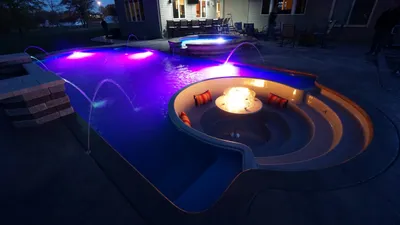
After dark, the gel coat colour matters less and the pool light colour takes over. A white LED light will illuminate the gel coat surface, and you will see the true colour in the lit areas. Colour-changing LED lights override the gel coat colour entirely, letting you turn the pool any colour you want.
This is one reason LED pool lights have become so popular. They give you colour flexibility that the gel coat alone cannot provide. A blue pool with colour-changing lights can look purple, green, red, or any other colour at night.
What colours do Thursday Pools and Azoria offer?
The two fiberglass pool manufacturers we install, Thursday Pools and Azoria (formerly Dolphin Pools), each offer their own range of gel coat colours.
Thursday Pools colour options
Thursday Pools offers several gel coat colours across their pool models:
- Blue - a medium blue that creates classic bright blue water
- Sandstone - a warm tan that produces green-blue water
- Graphite Grey - a dark grey that creates blue-green, lagoon-style water
- White - a clean white that makes water appear light turquoise
Not every colour is available on every pool model. Some colours are standard (included in the base price) and others are premium options that add to the cost. Your pool dealer can confirm which colours are available for the specific model you are considering.
Azoria colour options
Azoria (formerly Dolphin Pools) offers their own selection of gel coat colours. Their palette includes options ranging from traditional blues to modern greys and neutrals. Specific colour names and availability should be confirmed with your dealer, as Azoria periodically updates their colour offerings.
Both manufacturers use high-quality gel coats, but the exact shade of "blue" or "grey" will differ between Thursday Pools and Azoria. If colour is very important to you, ask to see physical gel coat samples or visit a completed pool in the colour you are considering. Photos on a screen do not capture the true appearance.
How should you choose your pool colour?
Choosing a pool colour is partly about aesthetics and partly about practical considerations. Here are the factors worth thinking through:
Match your surroundings
Look at your patio material, your house colour, your fence, and your landscaping. A grey pool looks natural next to grey pavers and modern landscaping. A blue pool works with almost anything. A sandstone pool suits natural stone and lush gardens.
Think about your sun exposure
If your pool area gets full sun all day, any colour will look good. If it is shaded for much of the day, lighter colours (white, light blue) will show more vibrancy than darker colours (graphite, dark blue) in the shade.
Consider maintenance visibility
Lighter colours show dirt and debris more clearly. Darker colours hide it. Neither is better or worse. It depends on whether you want to see what needs cleaning or prefer a surface that looks clean at a glance.
Visit a completed pool
The best way to choose a colour is to see it in person, with water, in real outdoor lighting. Gel coat colour samples, showroom displays, and online photos all give you a general idea, but nothing replaces standing next to a finished pool and seeing how the water actually looks.
If your pool company has recently completed a pool in the colour you are considering, ask if you can visit the site. Seeing the colour in a real backyard, in real weather, with real water, gives you confidence that what you are ordering is what you will get.
Remember: you cannot change it later
Unlike paint on a wall, a gel coat colour is permanent. The colour is built into the pool shell during manufacturing. Once the pool is made, it cannot be repainted or recoated in a different colour. This makes the decision more important than most finish choices in a home project.
If you are torn between two colours, lean toward the one that will look good in more conditions. Blue is the safest choice for this reason. It looks good in sun, shade, morning, evening, overcast, and clear skies. It pairs with any patio material. It is classic for a reason.
That said, if you have your heart set on grey or white, go for it. They all look good. The difference is in the mood and style they create, and that comes down to personal preference.
Frequently Asked Questions
What is the most popular fiberglass pool colour?
Blue is the most popular fiberglass pool colour in Ontario. It creates the classic bright-water look most people picture when they think of a backyard pool. Medium blue shades are the most commonly chosen because they look good in both sun and shade.
Does pool colour affect water temperature?
Yes, darker gel coat colours absorb more heat from sunlight. A dark blue or graphite pool can be 2 to 5 degrees warmer than a white pool in the same conditions. In Ontario's shorter swim season, this extra warmth can be noticeable, especially in early June and September.
Can you change the colour of a fiberglass pool after it is installed?
No, the gel coat colour is built into the pool shell during manufacturing. It cannot be painted over or recoated in a different colour after installation. This is why choosing the right colour before ordering is important.
Does a white pool show more dirt than a blue pool?
White and lighter-coloured pools do show debris, leaves, and dirt more visibly than darker pools. This can actually be an advantage because you see what needs cleaning. Darker pools hide debris but that does not mean the debris is not there.
What colour options does Thursday Pools offer?
Thursday Pools offers several gel coat colours including Blue, Sandstone, Graphite Grey, and White. Availability can vary by pool model. Some colours are standard and included in the base price, while others may be a premium option.